Feeling awkward about being on camera is more common than you'd exepct.
This is one of the most common worries couples have when they start thinking about wedding photography and videography.
Almost every couple I speak to says some version of the same thing.
“We’re a bit awkward on camera.”
“We don’t love being the centre of attention.”
“We’re worried we’ll feel watched all day.”
That feeling is completely normal.
In fact, it would be far more unusual for someone to say they love being filmed all day and can’t wait to be in front of a camera.
This post is an honest look at what being “awkward on camera” actually means, how it usually plays out on a real wedding day, and why it’s rarely the problem couples think it will be.
Most couples are not models. They are not performers. They are people who want to enjoy their wedding day.
Feeling slightly uncomfortable at the idea of being filmed does not mean:
It simply means you are human.
Even couples who are confident in everyday life often feel unsure when they imagine a camera following them around. That uncertainty is completely expected, especially if you have never experienced anything like a wedding day before.
In my experience, that awkward feeling fades far more quickly than couples expect.
At the start of the day, you might be aware that cameras are there. That is normal. But once things start moving, most couples stop thinking about it.
There is simply too much else going on.
You are seeing friends and family you might not have seen in years. You are sharing moments with the people closest to you. Emotions start to take over.
During key moments like:
You are focused on each other and the people around you, not on cameras.
For most couples, the camera does not disappear completely, but it fades into the background. It becomes part of the environment rather than the centre of attention.
A documentary-first approach is designed around this exact concern.
Rather than constantly directing or interrupting, the focus is on observing moments as they naturally unfold. That allows couples to settle into the day instead of feeling like they are performing for it.
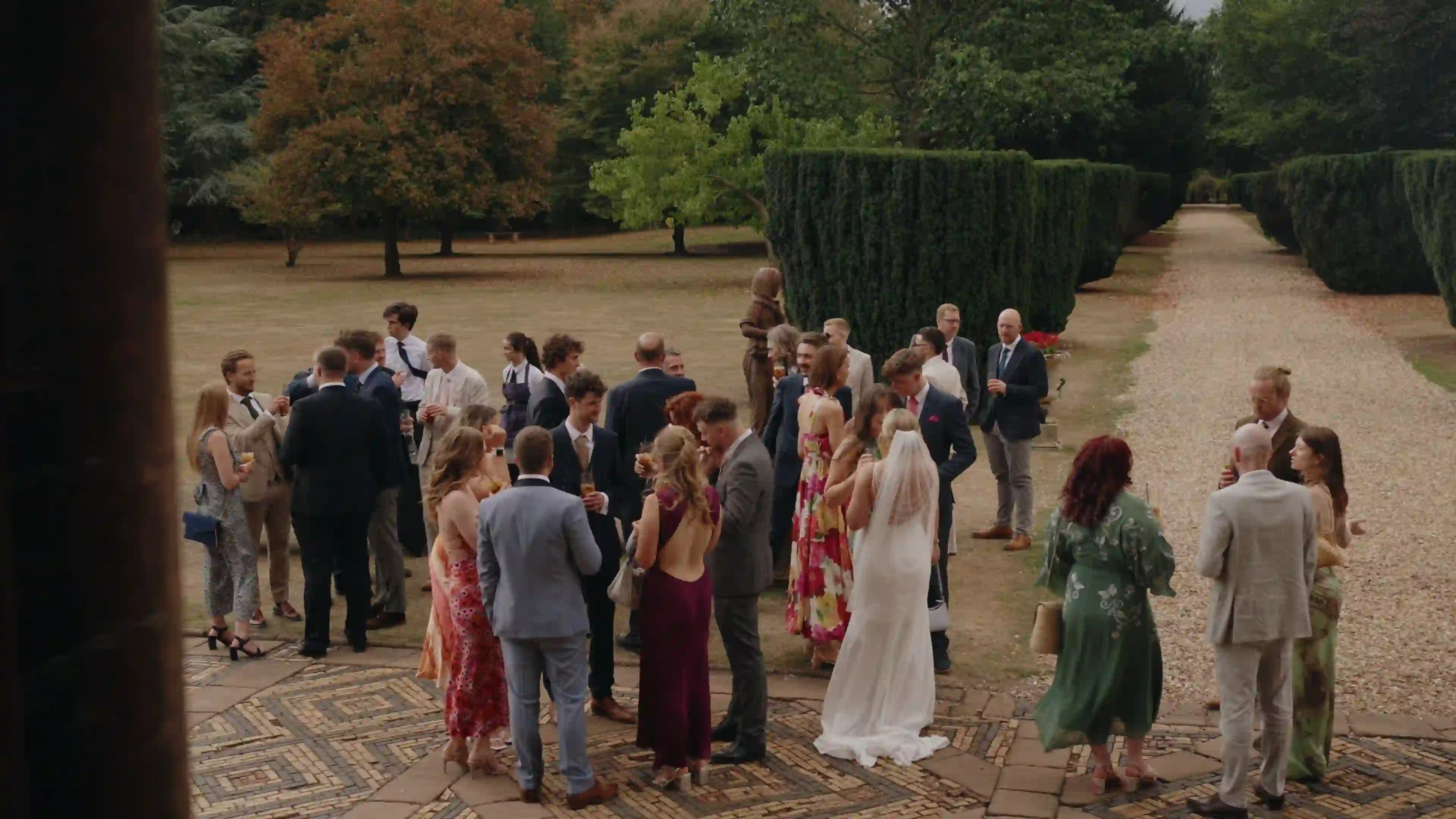
Candid moments are where this approach really shines. Conversations, laughter, reactions, and quiet moments often happen when people forget they are being filmed at all.
That is when the most meaningful footage is captured.
Many couples imagine:
With the right photographer and videographer, this simply is not how the day feels.
Most of the time, the only guidance you will receive is:
This usually takes five or ten minutes, not hours.
The rest of the day is about letting you experience it properly.
If filming ever feels overly obvious or intrusive, that is a reflection of the approach being used, not a reflection of you as a couple.
Portraits are often the moment couples worry about the most.
The reality is that they do not need to be long, intense, or uncomfortable.
With a calm, lightly guided approach, portraits can be:
You are not expected to know how to pose or what to do. That is part of the job of the photographer and videographer.
The aim is not perfection.
It is connection.
One of the biggest factors in how comfortable you feel on camera has nothing to do with technical skill.
It comes down to personality.
You are spending a lot of time with your photographer and videographer on your wedding day. Often during quieter moments, it is just the four of you chatting away.
Feeling comfortable with them as people makes a huge difference.
That is why choosing based purely on a portfolio can sometimes miss the bigger picture.
Video calls and conversations before booking matter. They give you a sense of:
When your suppliers feel more like familiar faces than strangers, the camera naturally feels less intimidating. Have a look at this guide for more on how to choose a wedding videographer.
Wedding days have a natural rhythm.
There are busy, emotional moments where everything is happening at once, and quieter moments where things slow down.
During those quieter periods, there is often more conversation. During the bigger moments, the focus shifts entirely to what is happening around you.
A good documentary approach respects that rhythm rather than fighting it.
You do not need to be confident on camera.
You do not need to know how to pose.
You do not need to perform.
If you choose people whose approach matches your personality, the camera will fade into the background far more than you expect.
Feeling awkward at the idea of being filmed does not mean you will feel awkward on the day.
Almost every couple worries about feeling awkward on camera. Almost every couple later says it was not an issue at all.
The difference is not confidence.
It is approach.
A calm, documentary-first style with light guidance allows you to focus on your wedding day, not on how it looks.
If you are choosing someone to film your wedding, look beyond the highlights. Pay attention to how they talk about working with people, not just how their films look.
That is often where comfort really begins.
Every Nocturne film begins with a conversation — about your story, your energy, and how you want your day to feel. We only take on a limited number of weddings each year to keep every film personal and intentional.

.png)


Cinematic wedding films for modern romantics — crafted by filmmaker Tom Kinton, blending fine-art cinematography with authentic storytelling across the Cheshire, North Wales, Shropshire, the rest of the UK and Europe.