This guide will walk you through what actually matters in a videography package, what doesn't, and what you genuinely need to look for when choosing someone to film your wedding.
Choosing a wedding videographer can feel overwhelming, especially when every package looks different. Some offer 6 hours, some offer 12, some include this, some exclude that. The truth is simple. Most of the industry has trained couples to compare videographers based on hours and checklists, even though those things rarely tell you anything about the quality of the final film.
At Nocturne Wedding Films, my philosophy is straightforward. I create beautifully crafted films that capture the real atmosphere of the day. To do that, I focus on your story, not the stopwatch.
This guide will walk you through what actually matters in a videography package, what doesn't, and what you genuinely need to look for when choosing someone to film your wedding.
This is one of the biggest traps couples fall into.
You should never have to decide between:
None of that tells you anything about the end result. A good wedding film isn't built on time limits. It's built on story.
I typically arrive around two hours before the ceremony to capture prep, details, atmosphere, and all the early emotional moments. I usually stay until roughly an hour after the first dance, because that's when the energy peaks, the dance floor fills, and the reactions are the most genuine.
But here's the key part.
If something meaningful is happening, I stay.
If you're doing sparklers, a big moment late in the evening, or something unexpected that's important to you, I don't pack up because a clock says so. I stay until I have everything I need to tell your story properly. If the vibe drops and nothing new is happening, I quietly wrap up. This isn't something I treat as a paid extra. It's simply the right way to film a wedding. For a real world example of this - check out Jake and Amy's Wedding Film from The Reinassance at Kelham. Jake and Amy chose not to have a first dance - which can be a huge moment in the film. However, I decided to stay until later in the evening until they started dancing together in order to capture some genuine smiles, laughter and dancing from them.
Packages built around strict hours encourage you to shop for the cheapest slot, not the best storyteller. You only get married once. Don't pick the person documenting it based on who stays until exactly 9.30 pm.
There are moments in a wedding day that are absolutely essential for a complete and meaningful film. Everything else is bonus footage that enriches the story, but these two are the backbone:
This is where the biggest emotional weight lives. It's your vows, your reactions, your expressions, the atmosphere, and the moment you actually get married. Without the ceremony, there's no story to anchor the rest of the film.
The speeches are your authentic personalities, your history, the humour, the emotion, the moments your closest people say things you'll want to hear again when you're older. Ceremony tells the story of your commitment. Speeches tell the story of who you are.
Everything past ceremony and speeches is flavour. Gorgeous flavour, important flavour, but flavour nonetheless. These two moments are the foundations.
A huge part of a quality wedding film comes down to two things:
The more angles I can fit in the room, the more reactions and moments I can preserve. This allows me to capture:
It also means the edit feels cinematic rather than static.
I always record audio separately. Camera microphones are nowhere near good enough for speeches, vows or readings. Clean audio is the difference between a film you treasure forever and one you struggle to watch. Every voice needs clarity and warmth, and that only comes from proper audio capture.
Better audio and better angles do more for your film than any optional add on ever will.
A second shooter isn't about having more people around. It's about capturing more story.
You need one when:
It has nothing to do with guest numbers. It's entirely about logistics and physics. A single person cannot be in two places at once.
I once second shot for another filmmaker at a Yorkshire wedding where the groom's prep was in a completely different area with no phone signal. It took some navigating, but I eventually found the house and captured the groom and his groomsmen having genuinely brilliant moments together. Those clips became important parts of the final film. Without a second shooter, they would have been completely missed.
Second shooters add depth, not clutter. The only time they're unnecessary is at small, intimate weddings where having too many photographers and filmmakers actually gets in the way of the atmosphere.
Raw footage sounds appealing until you understand what it actually is.
What you would receive:
Most of it is footage you'll never want to watch. And even if you did want to, it's nearly impossible to enjoy because raw camera audio is harsh and unbalanced.
If there are specific moments you want to see that didn't make the final edit, it's far better to ask your filmmaker for those individual clips.
If you're after the unfiltered, behind the scenes feel, you should either:
Raw footage itself rarely delivers the experience people imagine.
A teaser film is genuinely valuable. It's a way to relive your day while the emotion is still fresh, long before the full film is ready.
What I usually include:
Some weddings have a wild dance floor. Some don't. Some have deeply personal vows. Some prefer traditional ones. Every teaser is built around your personality and the tone of your day.
It also makes the wait for the full film feel exciting instead of long.
A smooth timeline creates space for creativity.
Here is my ideal flow:
Real moments matter here. For example, at Mark and Suzy's wedding, her dad had a tie with a childhood photo of her printed on the back. Capturing the moment he showed her that was something they'd never get back if I hadn't been there early.
15 minutes to position cameras, recorders and mics without rushing.
Let the emotions play out naturally.
A mix of:
I stay around an hour, longer if meaningful things happen. If the dance floor doesn't really take off, I won't overstay. If it explodes, I'll stay until I have everything I need.
Every couple is different, but if I had to create the ideal package for the average modern wedding, it would include:
This combination gives you the important parts of your story, the emotional core, the atmosphere and the energy, without overwhelming you with hours of slow prep footage you'll never watch.
My style is cinematic, emotional and authentic. I stay out of the way and let your day unfold naturally. For portraits, I give light prompts that bring out genuine moments. One of my favourites is getting you to link arms at the elbows and hips and walk together while trying to gently throw each other off balance. It always ends with real laughter and creates perfect, natural expressions.
It's not about posing. It's about guiding you into moments that feel like you.
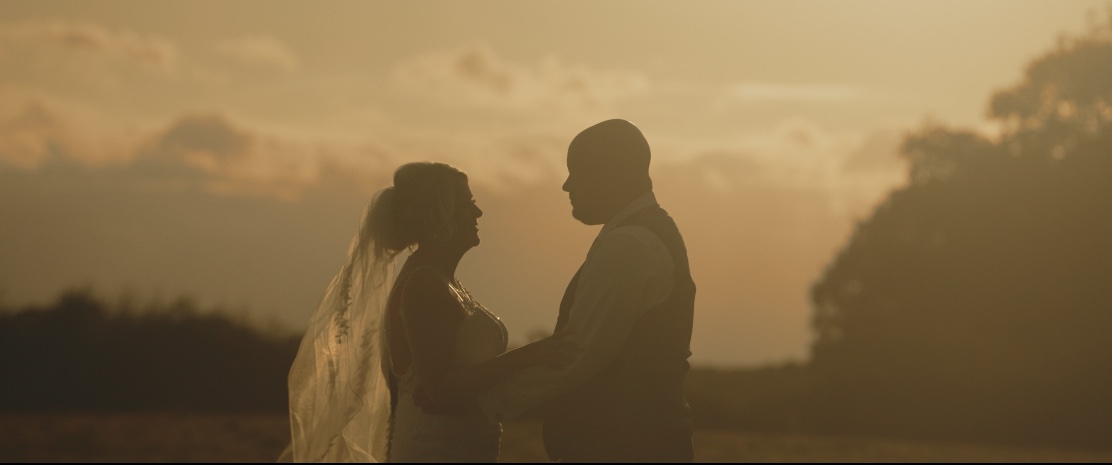
Every Nocturne film begins with a conversation — about your story, your energy, and how you want your day to feel. We only take on a limited number of weddings each year to keep every film personal and intentional.

.png)


Cinematic wedding films for modern romantics — crafted by filmmaker Tom Kinton, blending fine-art cinematography with authentic storytelling across the Cheshire, North Wales, Shropshire, the rest of the UK and Europe.